The design benches
What a bench is. One page per project holding every visual idea that is not decided yet: palettes, layouts, photographs, models found elsewhere. Each idea is shown as a real thumbnail with the link to where it came from, never described in words alone.
The law of the page. Nothing on a bench is applied unless it says so. When an idea is taken it leaves the bench and goes into the project. What was tried and refused stays, with the reason, so nobody proposes it again in a month.
Bench or studio. A bench holds what belongs to ONE project. What belongs to every project — the rules, the formats, speakers, motion, diagrams — belongs here in the studio instead.
The benches open today
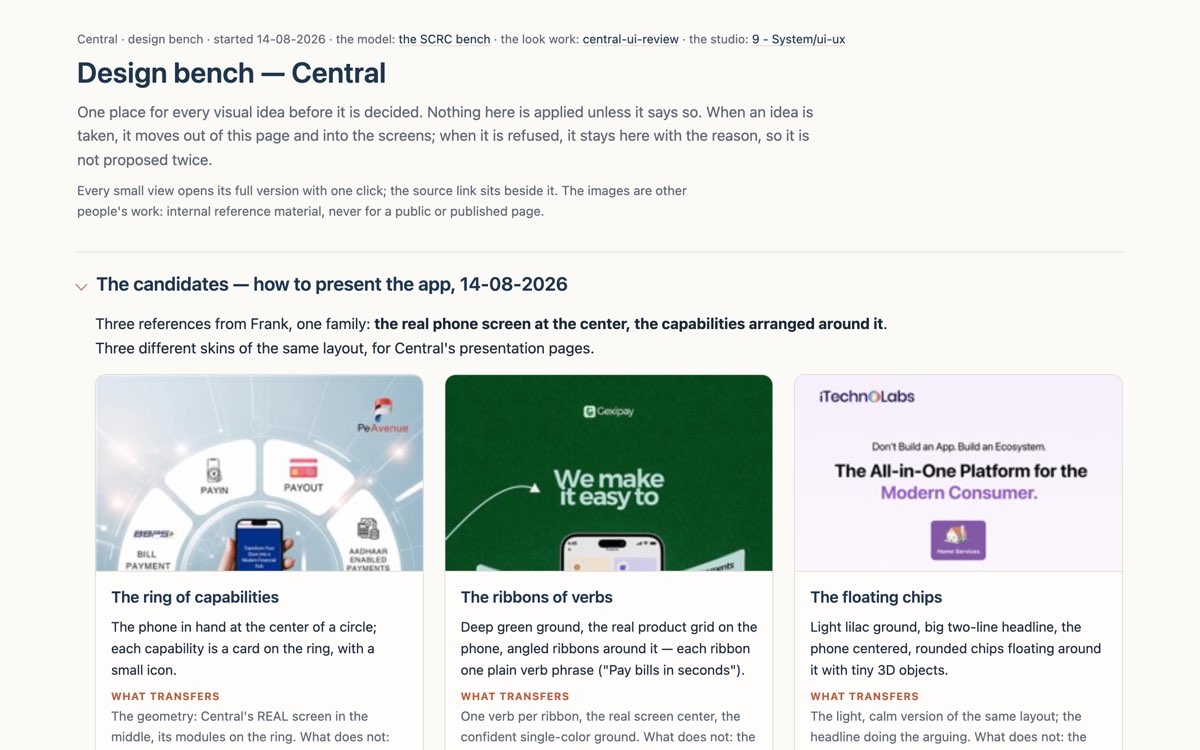
 Central
The reporting system for entrepreneurs. Its model was the SCRC bench; its look work is the Central UI review.
Holds: palette, models, what is parked.
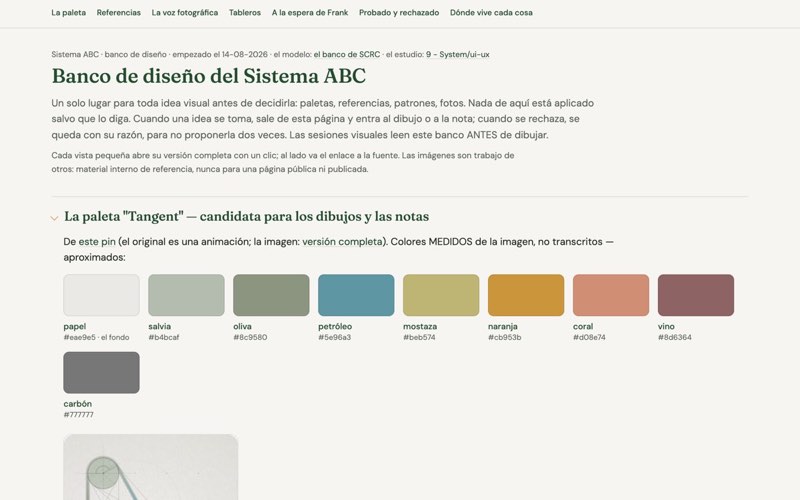
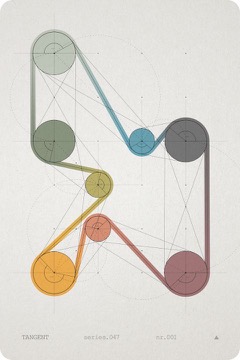 Sistema ABC
The environmental ministry's system. Written in Spanish, with the ministry's own words.
Holds: the palette, references, the photographic voice, boards, what was tried and refused.
SCRC
The first bench, and the model the other two copied.
Holds: palettes, layouts, shapes, parked ideas, what waits on Frank.
The two open ones are readable here. A bench lives with its project, so the studio carries a copy that is refreshed every time it is published (benches/sync.sh). SCRC stays on the Mac: it is a private project.
Opening a bench for a project
Say so, and it is built. The skill design-bench (skills/design-bench) makes the page and keeps it. It fires when you send a reference — a pin, a site, a screenshot — and say « keep this », « we may use this ».
Where it goes. <project>/design-bench.html, next to the project, never in the studio. Its pictures go in <project>/design-bench-refs/.
What is not a bench. Choosing the model for one page is 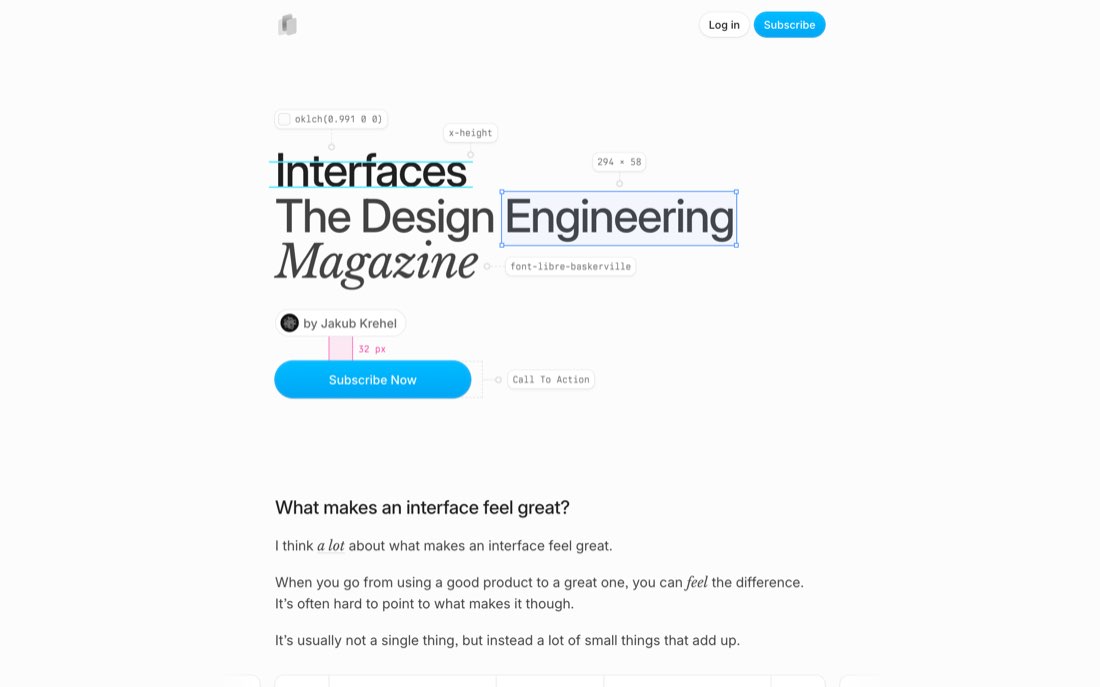 the liked-models bank. Hunting references is the
 art-director agent. Reviewing a built screen is 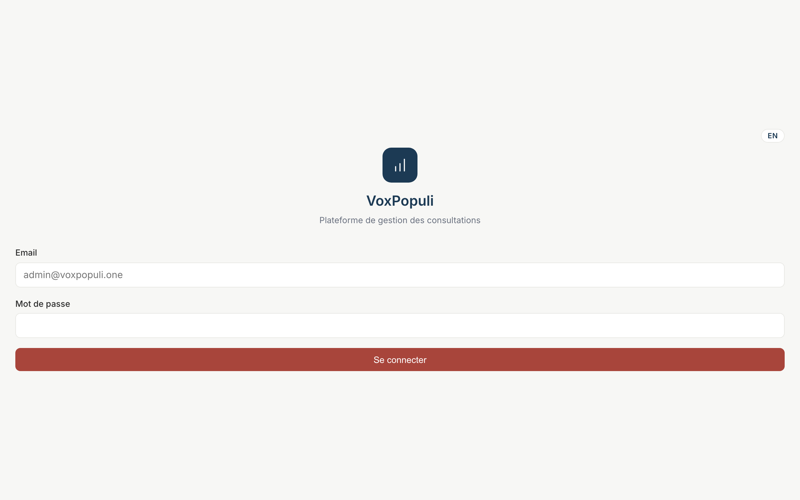 the UI review.